The best Costa Rican hotels are different from international resort properties. They offer something specific to their place — engagement with Costa Rican culture, food, ecology, hospitality — that international resorts can't replicate even when they're located in Costa Rica. This essay is about what the local hotels offer and why staying in them produces different travel than staying in resort properties.
What the local hotels are like
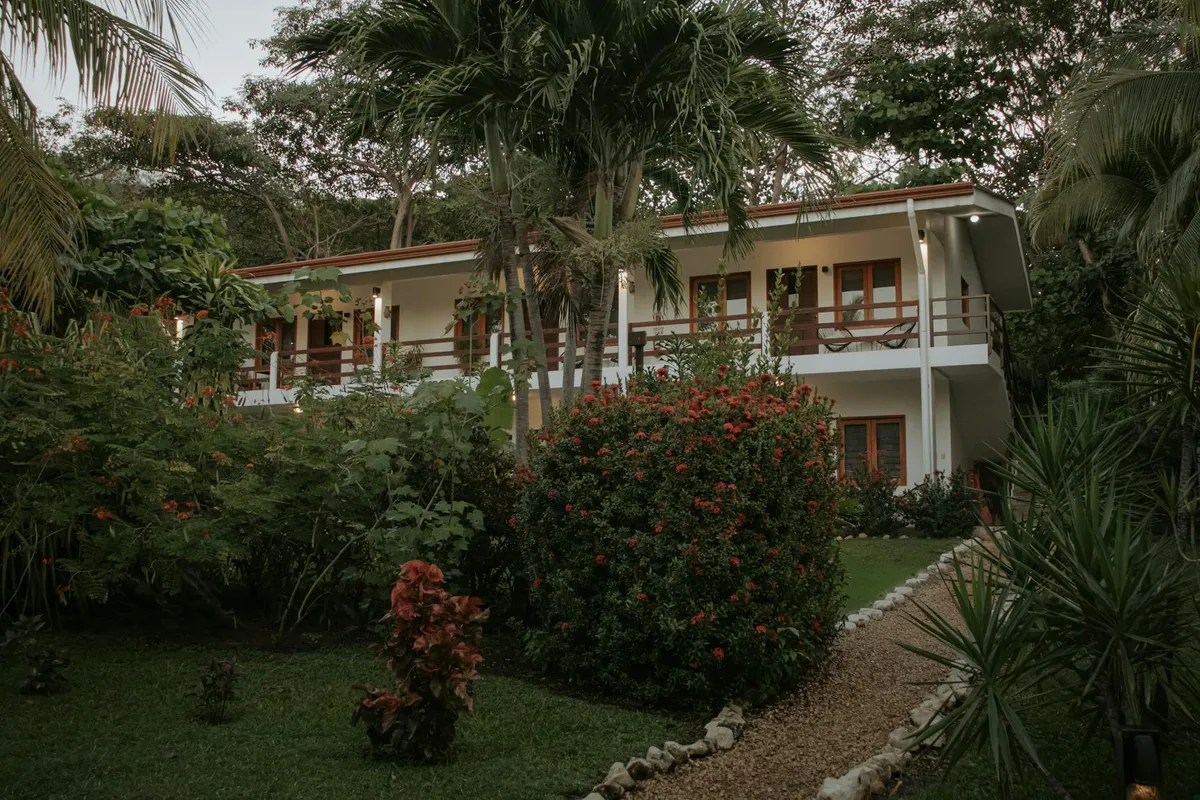
The properties I'm thinking of are typically small (often under 30 rooms), family-owned or independently operated, and integrated into specific local contexts. They might be coffee farms with rooms, beach lodges in small towns, mountain retreats in cloud forest regions, or traditional villa properties in colonial towns.
What they share: they're of their place. The architecture reflects local building traditions. The food is Costa Rican. The staff are local. The grounds typically include landscaping that supports local wildlife. The experience is shaped by what makes Costa Rica specifically itself.
What this offers travelers
The local hotel experience offers several things international resorts don't:
1. Engagement with the actual place. Resort properties create environments that could exist anywhere with appropriate climate. Local hotels create environments that couldn't exist anywhere else. Staying in them is part of how you experience the country.
2. Food that reflects local cuisine. Resort food tends toward international standards. Local hotels typically serve Costa Rican food prepared from Costa Rican ingredients. The food itself becomes part of the travel experience.
3. Direct contact with local culture. Staff, surrounding community, daily rhythms — all reflect Costa Rican culture rather than international resort culture. The contact is direct rather than mediated through international service standards.
4. Slower pace. The local properties typically operate at slower pace than international resorts. The pace itself becomes part of what you're experiencing — Costa Rica's "pura vida" approach made physical.
5. More-meaningful environmental engagement. Local properties often have substantial environmental investment — protected land, wildlife corridors, sustainable practices. The engagement isn't marketing; it's how the properties actually operate.
The trade-offs
Local properties also involve trade-offs vs. international resorts:
- Less consistent service standards (sometimes better than resorts, sometimes worse)
- Less elaborate amenities (smaller pools, fewer activity options, simpler facilities)
- Often more rustic infrastructure (older bathrooms, less air conditioning, more wildlife in rooms)
- Less English fluency in some properties (though most tourist-oriented properties have English-speaking staff)
For travelers expecting international resort standards, local properties can be disappointing. For travelers seeking actual engagement with Costa Rica, the trade-offs are usually worth it.
Specific patterns of local hotels
Across Costa Rica, several patterns of local hotels recur:
Coffee farm lodges — properties on working coffee farms with substantial guest accommodations. Typically combine farm experience with comfortable lodging.
Cloud forest eco-lodges — properties in Monteverde and similar areas focused on cloud forest experience. Strong environmental investment; rustic comfort.
Beach lodges in small towns — properties in towns rather than on resort-developed coast. More integration with local community than resort districts allow.
Colonial town villas — properties in colonial towns like Sarchí or Heredia. Architecture reflects colonial heritage; located in walking-friendly historic centers.
Mountain retreats — properties in higher elevations with cool climate. Often family-run with substantial gardens and grounds.
What to look for
For travelers wanting local hotel experience:
- Family-owned or independent rather than international chain
- Smaller scale (under 30 rooms typically)
- Located in or near actual Costa Rican community rather than in pure resort district
- Food served on premises that reflects local cuisine
- Staff who are predominantly local rather than international
- Property that reflects local architecture and landscape
Where to stay vs. visit
The best travel often combines: staying in local hotels for accommodation experience while visiting resort properties or international restaurants when specific amenities are wanted.
You don't have to choose between authentic engagement and comfort; combining both produces richer travel than committing entirely to either.
The takeaway
Costa Rican hotels offer different experiences than international resorts. The local properties produce engagement with the country that resort experiences can't replicate.
For your own Costa Rican travel, weight the local properties heavily in your accommodation decisions. The travel that emerges is meaningfully different from resort-based travel.